




AIM
The Tailoring Club is open to students of all sewing abilities, including those with no experience. There are a lot of students across all majors, years, and disciplines on campus that want to learn to sew but don’t know where to start. Sewing club wants to give them that space to learn and teaches students the basic sewing techniques.
Objectives
- To acquire knowledge sewing tools and techniques
- To understand the parts of sewing machine and their function
- To develop their basic sewing skills and also have the opportunity to explore their creativity.
- To make use of their leisure time a valuable one.
Vision
- The vision of this club is to enhance the self employability skills of the students by teaching them
the fundamentals of sewing
Mission
- The mission of Tailoring club is to teach the students to acquire hand sewing and embroidery
skills, operation and use of a sewing machine, and provide training in stitching varieties of
patterns.

Mrs. U. Varalakshmi
Mrs. J. Dhanalakshmi
Dr. Freda Gnanaselvam
Mrs. V. Yasodha
Ms. R. Monica
TAILORING CLUB FABRIC PAINTING COMPETITION REPORT
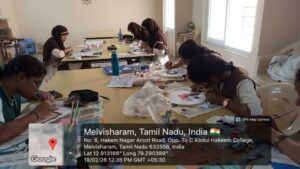
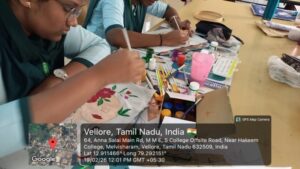
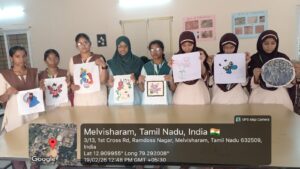
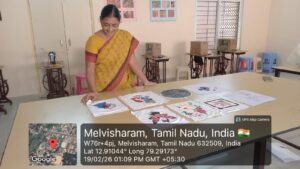
The Tailoring Club of the Department of Interior Design and Decor successfully organized a Fabric Painting Competition on 19th February 2026 at the Textile Lab from 11.00 AM to 1.00 PM.
Objective of the workshop:
The primary objective of the competition was to enhance students’ creative and practical skills in textile surface design and home décor techniques. The event aimed to promote artistic expression, innovation, colour harmony, and aesthetic understanding through fabric painting. It also provided a platform for students to explore their imaginative abilities and technical execution skills.
Workshop Highlights:
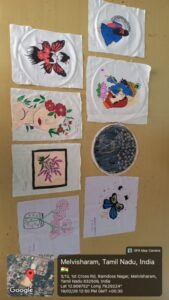
Students from various departments actively participated in the competition. The Textile Lab was transformed into a vibrant creative space filled with colours and artistic energy. Students demonstrated a wide range of themes including traditional motifs, floral patterns, contemporary abstracts, ethnic designs, nature-inspired compositions, and modern home décor concepts. Participants showcased excellent control in brush handling, colour blending, shading techniques, and detailing. The competition reflected not only artistic talent but also patience, precision, and time management skills. Faculty members guided and encouraged students throughout the session, maintaining a motivating and disciplined environment.
Judgement Criteria
The evaluation of the artworks was carried out by the panel of judges based on the following criteria
- Originality and creativity of the design
- Colour combination
- Neatness and finishing
- Overall presentation and aesthetic appeal
The judges appreciated the innovative concepts and the dedication shown by the participants. The decision was challenging due to the high quality of work presented. Winners were selected based on their outstanding performance and artistic excellence.
Engagement and Feedback
The competition witnessed active engagement from all participants. Students worked with enthusiasm and demonstrated keen interest throughout the two-hour session. The interactive environment encouraged peer learning and creative exchange of ideas.
Feedback received from participants was highly positive. Students expressed that the competition helped them improve their fabric painting techniques, boosted their confidence, and enhanced their understanding of textile surface design. Faculty members also appreciated the initiative taken by the Tailoring Club in organizing such a meaningful and skill-oriented event.
Conclusion
The Fabric Painting Competition concluded successfully at 1.00 PM with appreciation from faculty and participants. The event effectively fulfilled its objective of nurturing creativity and strengthening practical skills in textile design.
REPORT ON DRAPE AND DAZZLE FASHION SHOW
The Tailoring Club of the Department of Interior Design & Decor successfully organized an interdepartmental event titled “Drape & Dazzle”, showcasing various styles of saree draping. Held on February 19, 2025, at the Textile Lab, PG Block, from 1:30 PM to 3:30 PM, the event witnessed enthusiastic participation from students across multiple departments.
Participants showcased their creativity and expertise in draping sarees in multiple traditional and contemporary styles, demonstrating the cultural significance and evolving trends in saree draping. The event provided an excellent platform for students to enhance their practical skills and aesthetic sense while fostering interdepartmental engagement. The event not only highlighted the versatility of the saree but also encouraged an exchange of ideas on fashion aesthetics
The hands-on experience helped participants develop a keen sense of aesthetics, body proportion, and fabric selection key elements in the world of fashion. Such activities not only enhance practical learning but also in still confidence and a sense of pride in cultural expression.
Mrs. V. Yasodha, Head of the Department of Interior Design & Décor, who evaluated the draping style of contestants based on elegance, technique, presentation, and overall appeal. The top three winners were awarded First, Second, and Third Prizes in recognition of their outstanding performances.
The event was a great success, promoting skill development and cultural appreciation among students. It also encouraged innovation in draping techniques, making it a valuable learning experience for all involved
REPORT ON BEADED CURTAIN WORKSHOP
The Department of Interior Design and Decor at M.M.E.S. Women’s Arts and Science College On behalf of the Tailoring Club, an intradepartmental activity Beaded Curtain Workshop was successfully organized on 10th July 2025 Thursday. The event took place at the Textile Lab, PG Block from 10:30 AM to 01:00 PM. The event was organized by Mrs. Varalakshmi U, the Tailoring Club coordinator.
Participation
The workshop saw an enthusiastic turnout of 23 students from various departments, reflecting a broad interest in decorative arts and design. The diverse group of participants fostered a collaborative and interdisciplinary learning atmosphere.
Workshop Content and Activities
The workshop was meticulously planned and executed, offering a comprehensive learning experience. The session was structured as follows:
Introduction to Beaded Curtains: The workshop began with an engaging presentation on the history and cultural significance of beaded curtains. Participants were shown various types of beaded curtains and their applications in modern interior design, including their use as room dividers, window treatments, and decorative wall hangings.
Materials and Tools: Variety of beads (wooden, glass, plastic, and acrylic) was used, strong nylon thread, curtain rods, and essential tools like scissors and pliers. The importance of selecting the right materials for durability and aesthetic appeal was emphasized.
Demonstration and Technique: A step-by-step demonstration was given by the organizer of Tailoring Club. Students were taught to plan their beaded curtain designs, considering colour combinations, bead sizes, and desired patterns.
Various techniques for stringing beads were demonstrated, including simple single-strand patterns and more complex multi-strand designs. The use of knots and crimp beads to secure the strands was also covered. Participants learned how to attach the finished beaded strands to the curtain rod, ensuring even spacing and a uniform fall.
Hands-on Session:
Following the demonstration, students were given ample time to create their own beaded curtain strands. The room buzzed with creativity as students experimented with different bead combinations and patterns
Outcomes and Feedback
The workshop was a resounding success, with all 23 students completing their individual beaded curtain pieces. Participants expressed immense satisfaction with the workshop. Students gained practical skills in beadwork, design planning, and material handling. The workshop provided a platform for students to express their creativity and artistic flair. The event fostered a sense of community among students from different departments, encouraging interaction and shared learning.
Conclusion:
The workshop not only provided a valuable learning experience but also fostered a sense of community and collaboration among the students. Most of them expressed their appreciation for the opportunity to learn a new craft and requested more such sessions in the future to enhance their practical knowledge and creative expression.
TAILORING CLUB WORKSHOP REPORT ON EMBROIDERY APPLIQUE
The Department of Interior Design and Decor of M.M.E.S Women’s Arts and Science College organized a “EMBROIDERY APPLIQUE” workshop held on August 23, 2024 at P.G BLOCK TEXTILE LAB.
Objective of the Workshop:
The workshop aimed to introduce students to the art of embroidery applique and its applications in designing. The session was designed to enhance students’ skills in fabric manipulation, stitching, and decorative design, while fostering creativity and interdepartmental collaboration.
It also provided students with hands-on experience in creating embroidered designs, which can be applied to various projects. A total of 20 students from various departments participated in this session. Embroidery appliqué is widely used in home décor items such as cushions, curtains, and wall hangings, making it a highly relevant skill for students in design fields.
Workshop Highlights:
The session began with a warm welcome, followed by a discussion on the significance of embroidery applique in interior design and its role in enhancing textiles for home furnishings. Resource Person, U.Varalakshmi, Assistant Professor, Department of Interior Design and Décor, provided a detailed overview of embroidery appliqué. She discussed its history, the various types of appliqué, and its significance. The session also covered different types of stitches, including the satin stitch, blanket stitch, and running stitch. Students were introduced to fabric choices and the tools needed for applique work.
Hands-on Experience:
Students were shown how to achieve clean, professional results, with an emphasis on precision and creativity. They were encouraged to experiment with different colors and textures. Throughout the session, Varalakshmi offered individual guidance, helping students refine their appliqué skill.
Engagement and Feedback:
The students were highly engaged throughout the workshop, demonstrating enthusiasm and a strong willingness to learn. Many students expressed interest in exploring advanced workshops focused on other embroidery and textile techniques.